Yorkshire Trailers now available locally at Grange Machinery, Sproatley Find Out More

What Should You Do If Your Trailer Is Involved In An Accident?

Nobody ever wants to think about the possibility of an accident but they can and do happen. As such, it is important to stay safe and take stock when they do. 

Your health and safety come first, then insurance procedures, and finally ensuring that your trailer and car are serviced and repaired.

As winter approaches, driving conditions become more hazardous, and this can be particularly difficult for people using trailers for domestic and business purposes due to the unpredictability of other road users.

If you are caught in a collision involving your trailer, here is what you should do to get back on the road as soon as possible.


Stop In A Safe Place

The first step to take if you end up in a collision is to stop in as safe a place as possible. You should also turn off your engine, apply the handbrake, turn on your hazard warning lights, put on a high-visibility jacket if you have one and keep away from moving traffic as much as possible.

As you will need to share insurance details, it can be a crime to drive away from the scene of an accident if you do not report the accident to the police within 24 hours.


Check To Make Sure You Are Safe

Whilst your immediate concern may be your towing vehicle, trailer or payload, make sure that you and everyone else in your vehicle are safe and uninjured. 

Even if the impact was not severe, there may be a chance of whiplash or other spinal injuries that may not be immediately apparent.

If anyone is injured, call 999 to ensure they get urgent medical attention, whilst you should call either the police or Highways Agency if the road cannot be easily cleared.


Do Not Panic

Once you are safely stopped and you have checked for injuries and immediate emergencies, take a deep breath and try to remain calm. Any damage to your vehicle can be fixed. Any lost materials and goods can be replaced. 

What is harder to heal is injuries, so as long as you feel okay, everything else can be worked through. Getting upset or frustrated will not help your situation and could make it worse.

Call your insurance company, as they will be able to provide advice on what to do next, any specific information you need to gather and what you should do to recover your vehicle and your trailer.


Gather Evidence And Exchange Insurance Details With Other Motorists Involved

Take note of when the accident took place, jot down registration numbers and take pictures, if it is safe to do so, of any damage to your vehicle.

Once it is safe, talk to other drivers involved and exchange your name, address and insurance information. They will also do the same, so make sure you note that down. 

Make sure to ask if the driver is also the registered owner of the vehicle. Get their information too (and share the information about the registered owner if you are driving a company car yourself).

If there are any independent witnesses, try to get their contact details too, in case they need to be asked about the accident later.

Any information you gather will help your claim for damages later.


Do You Need To Call The Police?

If an accident involves no injuries, everyone swaps information, and the road is not blocked, the police may not need to get involved.

However, if another driver leaves the scene without providing insurance details, the other driver has no insurance at all, they appear to be under the influence, or you have a suspicion that the collision was caused deliberately, contact the police within 24 hours of the accident.


Check To Make Sure Your Trailer Is Safe To Tow

Check to ensure that your towing vehicle is safe to drive and that the towing vehicle is secure and can be safely towed.

Sometimes a small impact can cause a vital component to dislodge and potentially make your trailer harder to control, so err on the side of caution if you are worried that you cannot safely drive it home yourself.


Take Your Trailer To Get Repaired And Serviced When You Are Advised To Do So

Talk to your insurance company and await their advice on future repairs. Often they will suggest getting any issues fixed as soon as possible, but they may want time to gather evidence or to ensure you take pictures of any evidence of damage.
What Is Trailer Sway And How Can You Avoid It?

When adverse weather suddenly hits, the towing conditions that you took for granted just moments ago can rapidly change, which in some cases can cause a trailer to start swaying or even snaking around.

Sometimes this is a consequence of the conditions, sometimes it is due to poorly secured trailer loads, but other times it is a consequence of worn-out parts which need to be replaced.

As a trusted local distributor of Ifor Williams trailers, service and components, we are in the perfect position to provide advice on what may be causing your trailer sway, whether it requires a simple adjustment to your work or extensive repairs, and how to minimise it in the winter.

As cold weather approaches and the weather gets ever more unpredictable, here is what causes trailer snaking, what you can do about it as it happens, safe towing habits and how to avoid any problems in the future.


What Is Trailer Snaking?

Swaying or snaking is when a trailer or caravan weaves about pendulously whilst being towed in a straight line, typically long after a turn, lane change or other manoeuvre has been executed.

It can be somewhat unnerving when it happens whilst driving, particularly as it can intensify, making it more difficult to control the trailer and even potentially leading to jackknifing, where the trailer swings around the towing vehicle, and an increased risk of accidents.


What Causes Trailer Sway?

  • Towing Too Quickly – Beyond making sure that you follow the lower national speed limits, travelling too quickly or putting your foot down can cause or intensify snaking.
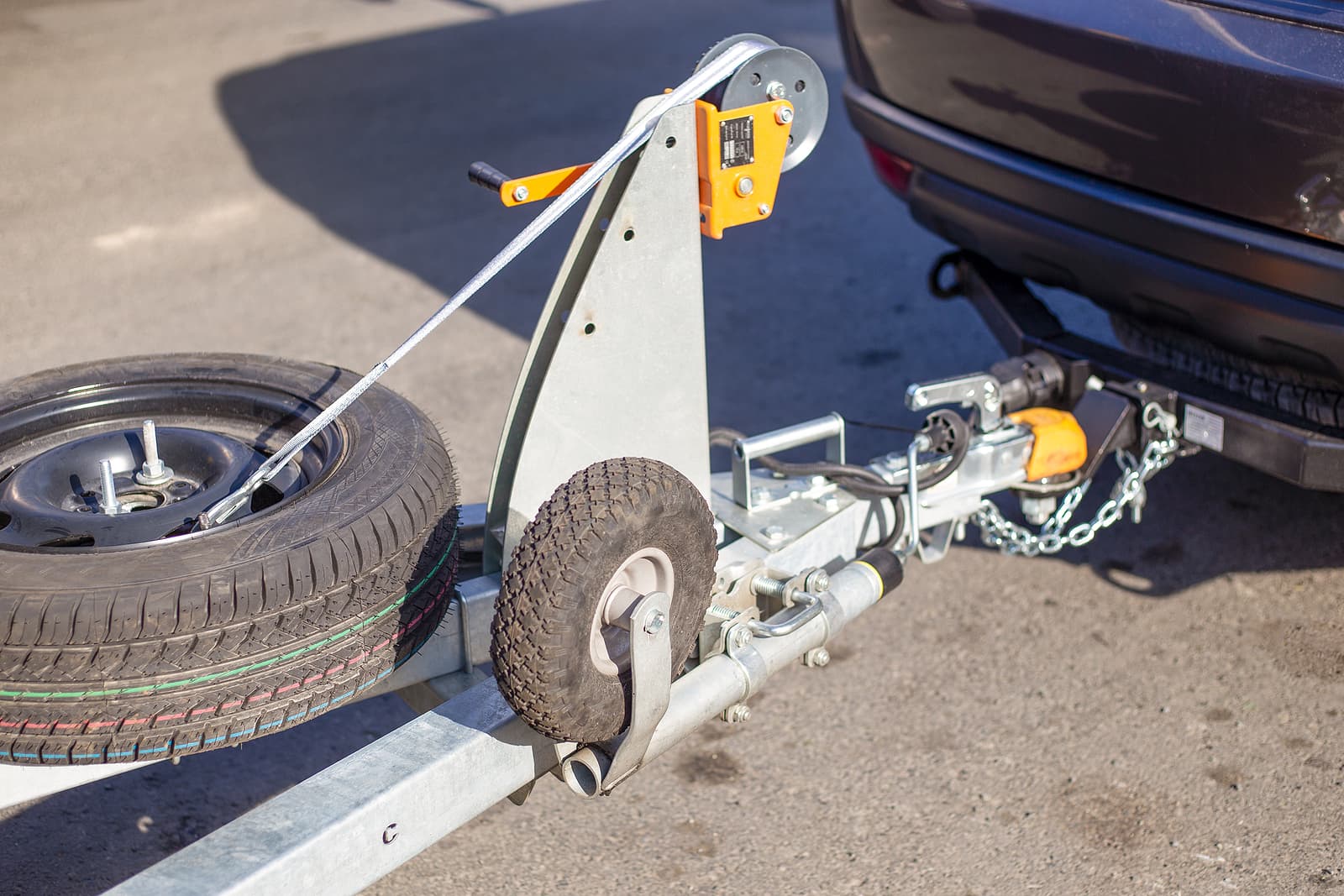
  • Incorrect Coupling – If the coupling or connection between the trailer and towing vehicle is inappropriate, it can make the latter harder to control.
  • Bad Weather Or Road Conditions – If a road is bumpy, has a loose surface such as gravel, is uneven, has standing water, ice or snow on top, it is far more difficult to maintain traction and balance whilst towing a trailer.
  • Poor Distribution Of Loads – The weight distribution of a trailer is essential, as poorly secured or incorrectly balanced loads can cause snaking and increase the risk of jackknifing.


What Can You Do If Your Trailer Starts Snaking?

If your caravan starts to snake, remain calm and start acting immediately to regain control of your trailer and towing vehicle.

Hold onto your steering wheel tightly and avoid sudden movements. Ideally, you should keep moving straight ahead as long as it is safe to do so, whilst gradually reducing your speed by lifting your foot off the accelerator pedal.

Shift down if you are using a car with a manual gearbox, but only gently apply the brakes if you feel like you are in danger of a collision. Slamming on the brakes often causes a jackknife.

If you are still struggling to stop the snake after this, get off the road as quickly as possible, either by pulling over at the side of the road or taking the nearest exit on the motorway. 

Examine the trailer once you have come to a complete stop and check your couplings and hitches to ensure there is a firm connection, as well as your existing load to see if it has moved or is causing an unbalanced ride.

In many cases, snaking is fixable, but it requires swift, decisive but also gentle action to bring everything to a gradual, safe stop.


How Do You Avoid Trailer Sway In The First Place?

The best possible way to avoid trailer snaking is to stop it happening to begin with. This ensures that you stay safe, your trailer is easier to control, and you feel more comfortable at the wheel of your trailer, regardless of the weather or the driving conditions.

With that in mind, here are some top tips to minimise the risk of sway in your trailer.


Make Sure Any Loads Are Properly Balanced And Secured

A common cause of snaking is uneven weight distribution, where, due to incorrect securing or having the weight of loads biased on one side or the other, the trailer has a tendency to lean in one direction, affecting balance and causing snaking.


Use The Right Coupling

Make sure your trailer is connected properly to your towing vehicle, with the appropriate anti-sway bars and a connector that is right for the size and weight of the trailer you are towing.


Plan Your Route Carefully

Try to avoid difficult roads where possible, avoid unnecessary journeys in bad weather and aim to complete as much of the journey on main roads as possible, as they will be kept in the best possible condition for your trailer.


Make Sure Your Trailer Is Serviced

Inspect your trailer before you start to make sure there are no egregious problems, but get in touch with the experts if you are at all worried about broken or damaged parts.

Everything You Need To Know About Bespoke Trailer Tyres

By the time winter arrives, it brings with it a new set of challenges for your trailers, and it is typically a good idea to book a service with your local Ifor Williams trailer experts before the weather to ensure that its tyres can handle the variable conditions.

Whilst every part of a trailer needs maintenance over the winter to ensure it can quickly be rolled out in the spring, trailer tyres can be affected by inactivity in the same ways that any other tyres can.

However, as these tyres are designed differently, they have some fundamental changes to take into account the fact that they often need to carry heavy loads whilst avoiding snaking.

A lot of people will be working on their tyres over the autumn as part of their winterising routine, and with that in mind, here are the answers to some of the most commonly asked questions we get about trailer tyres.


Are Trailer Tyres The Same As Car Tyres?

Outside of being made of the same material and having the same basic shape, trailer tyres are quite differently made and are typically given a special marking to denote them as trailer tyres.

The reason for this is that trailer tyres are built to be significantly stiffer in order to carry heavier loads and maintain stability whilst being towed.

You cannot swap trailer tyres for regular tyres, even in the rare cases where both types of tyre fit on the same wheel.

The different handling characteristics will cause your trailer to be significantly more difficult to control, and the wear on the tyres will be far more intensive.

All of this, in combination, leads to a greater risk of accidents, which makes having a spare trailer tyre a better option than trying to use your car’s spare tyre.


What Do You Need To Do To Ensure Your Trailer Tyres Are Legally Compliant?

Trailer tyres are bound by broadly the same laws as conventional car tyres, and if your tyres fail to comply with the current registered standards, you can receive up to 3 penalty points and a fine of up to £2500.

Specifically, trailer tyres must:

  • Have a minimum tread depth of at least 1.6mm around the whole circumference and across the centre three-quarters of the tyre most likely to contact the road. In reality, anything lower than 3mm will be next-to-useless in the rain.
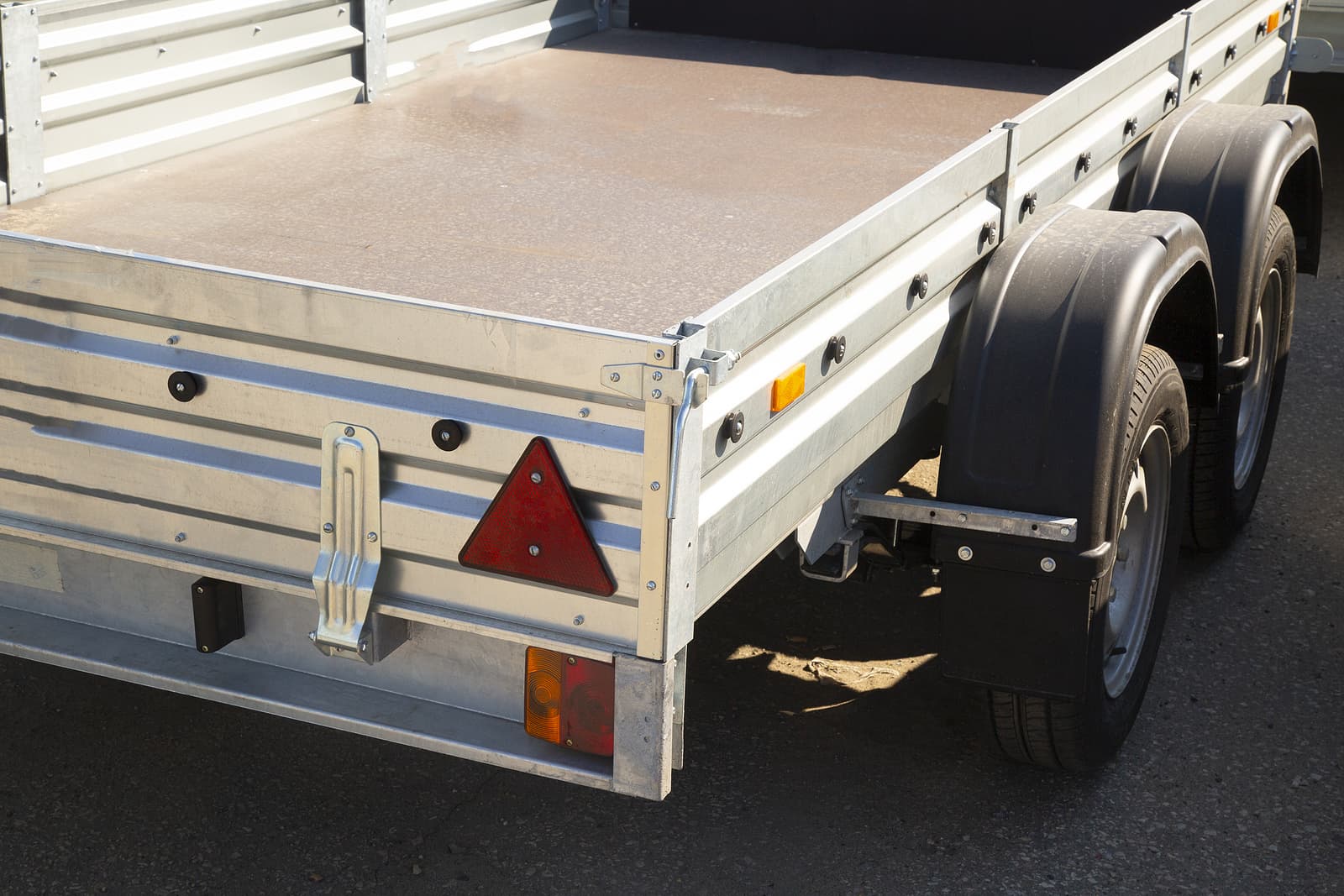
  • Be protected by mudguards.
  • Not have any bulges.
  • Not have any deep cuts.
  • Be the same type of tyre. In other words, you cannot have radial and cross-ply tyres on the same axle. 
  • Be correctly rated for your trailer.

Ultimately, your trailer tyres need to be treated the same way as your towing vehicle’s tyres, and particularly in winter or following a break period where there is a chance of degradation and flat spotting.


What Can Cause Trailer Tyres To Degrade?

More than any other component on your car, trailer tyres are vulnerable to degradation of the rubber. 

This can become particularly noticeable once your trailer has been put away for the winter, as the pressure of staying in one place in combination with the colder conditions can cause flat spots in the tyres if they are not rotated or the trailer is not stored on a jack.

The rubber itself can rub away, but it can also harden and become easier to crack, which increases the risk of a blowout or flat tyre if not managed properly.


When Should You Change Your Trailer Tyres?

We can give advice on how well your trailer tyres are holding up and replace any that are no longer fit for purpose, but there are a few rules of thumb you can follow whilst waiting for your service:

  • There is damage to the tyre, such as bulging in the sidewalls, punctures or cracks. As trailer tyres run on higher pressures, any weakness is potentially dangerous.
  • There are visible tears and scuffs on the tread area and sidewalls, as this can affect traction or indicate accelerated wear.
  • The tread depth is under 1.6mm, which would make them illegal to use. However, you should consider replacing them at 3mm if you use your trailer in winter weather or expect to drive in the rain a lot.
  • The tyres are six years old or older. The tyres will have a date of manufacture to help with this.
  • The tyres are regularly underinflated, and it is difficult to maintain adequate tyre pressures.

As with everything else trailer-related, we can help ensure that your trailer stays safely on the road, and regular services help to enhance a working trailer’s lifespan.