What Are The Most Common Causes Of Trailer Accidents?

Businesses can only succeed when they are in constant motion, and many agricultural firms rely on their trailers in order to transport goods and perform a range of tasks on and off the land.

Not only does this mean that you need to pick the right high-quality trailer for the needs of your business, but you also need to make arrangements to ensure it is professionally serviced and repaired.

We can provide that complete service, offering tailored advice to ensure you get the right equipment customised to meet your exacting needs, whilst also offering maintenance and servicing to ensure it lasts as long as possible.

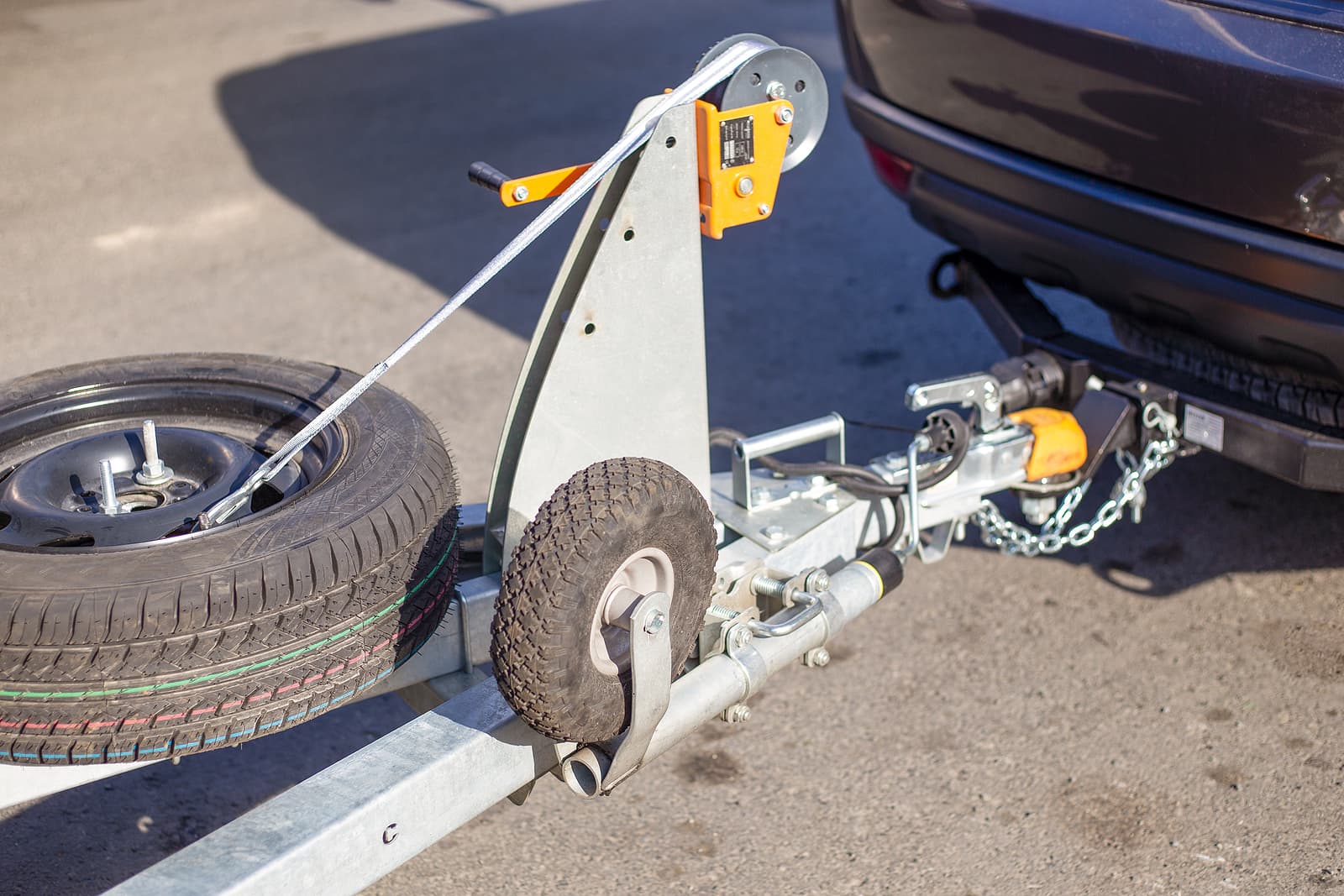
The biggest reason why this is so important is that driving an unsafe trailer is against the law, but the reason why the Highway Code is particularly strict is that an unsafe vehicle has the potential to cause serious accidents on the road.

Whilst anything that is a cause for concern should be checked, here are some of the most common causes of trailer accidents, and how a regular maintenance routine can help avoid them.


Brake Fade

Worn and faded brakes are a potential danger with any vehicle, but brake fade can be particularly problematic and difficult to diagnose with trailers, as a loaded trailer can lead to unexpected braking properties and longer stopping distances.

Brake fade can cause accidents for a range of reasons, not only due to brake failure, but also due to poor brake alignment or synchronisation between the towing vehicle and trailer. These issues can lead to a loss of control, which can increase the risk of a collision or crash.

Effective maintenance will not only replace brake pads and shoes, but also examine particular wear trends to ensure that the brakes are functioning evenly and thus will be balanced and consistent in an emergency braking situation.


Decoupling

A potentially particularly dangerous accident, if the trailer is not hitched correctly to the towbar of the towing vehicle or there is a problem with the attaching equipment, it could potentially lead to the trailer detaching. If this happens whilst on the road, the unpredictability of the trailer could cause a collision with other vehicles on other lanes.

There are multiple failsafe systems in place to ensure that the trailer stays attached, and frequent inspections of the mechanics will help to minimise the risk of a failure of the coupling system.


Poor Visibility

The lights on the back of a trailer are linked to the towing vehicle and are even more critical than they are on a standard car.

A lot of accidents are caused by poor visibility, as the car behind cannot properly see where the trailer is in relation to the rest of the vehicle and thus cannot adequately anticipate where it is moving on the road.

Checking to make sure all of the lights work, including the tail lights, brake lights, turning indicators and hazard warning lights, all work and work quickly. 

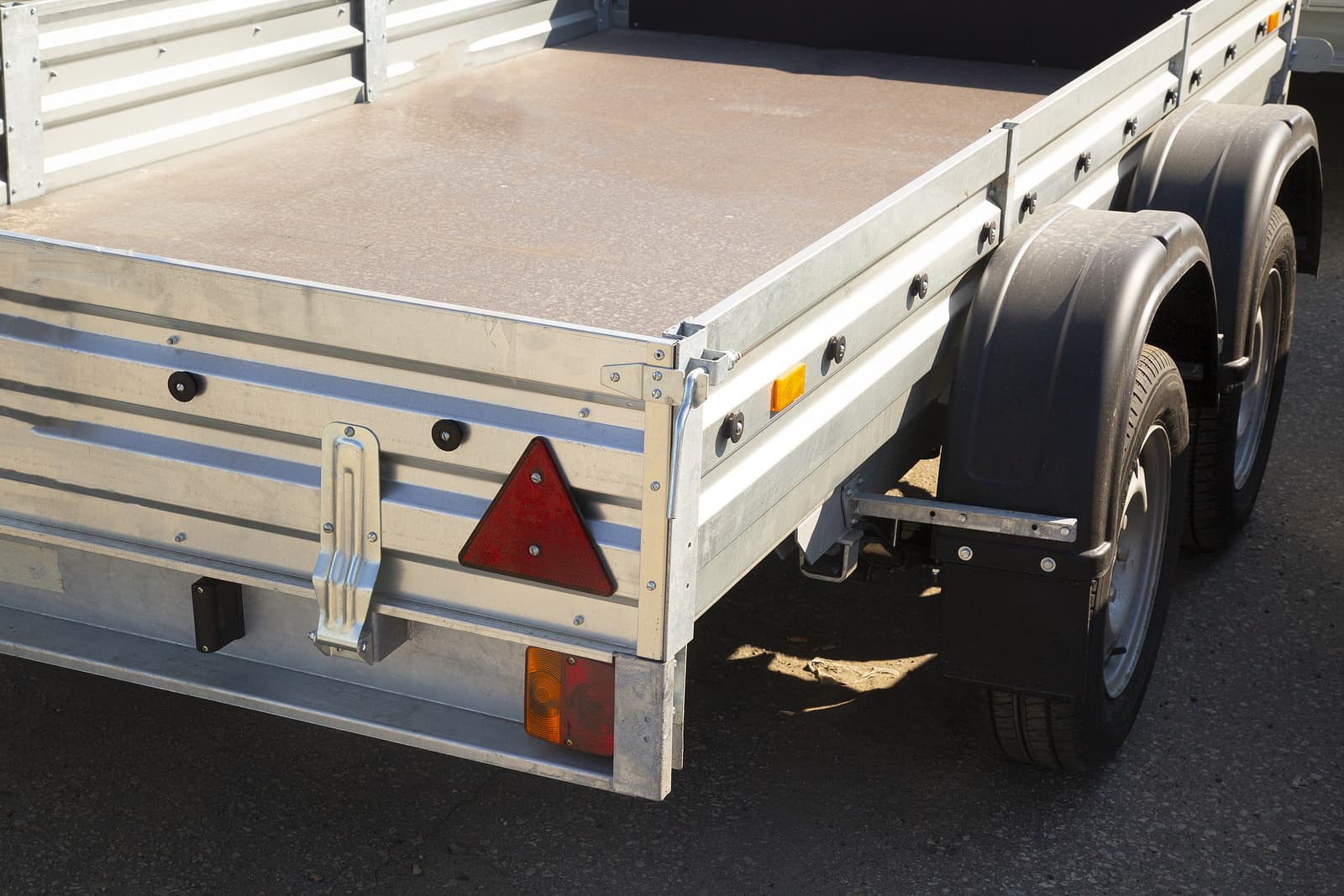
As well as this, make sure that the reflectors are in good condition, are undamaged and remain clean. They are an easy and vital way for cars to see the trailer and where it is on the road.


Snaking And Jackknifing

A common cause of trailer accidents that is typically associated with the trailer itself is swerving and snaking, which is where the trailer begins to oscillate behind the towing vehicle.

A degree of snaking can happen for several reasons, particularly in situations where a car is dealing with strong winds, high speeds and the effects of aerodynamic wake, but excessive levels of snaking are not only a serious hazard but could be the result of a mechanical issue.

At worst, it can cause a jackknife, a serious incident where a trailer whips around the towing vehicle, often causing a significant loss of control and the potential for serious accidents.

All of these issues can make a car and trailer more difficult to control at high speeds, whilst driving straight ahead and whilst turning.

They are caused in part by imbalances with the trailers’ braking and suspension. This can be detected through wheel balancing and inspections of the wheels and springs. They can also be the result of damage or rough terrain that affects the wheel, suspension or chassis.

Drivers can also help to minimise the risk by evenly distributing loads and gently slowing down to regain control of a snaking trailer rather than locking up the brakes or turning sharply. It also helps to take some time to get accustomed to how the trailer feels both empty and with a typical load.

Why Was A Racing Horse Banned From Most American Tracks?

There are few equestrian businesses that can create as potent a mixture of emotions as horse racing. You need to have the love, care, affection and equipment to take care of a horse and ready him for meets, but also the ability to look past sentimentality to know when a horse lacks what it takes.

The most interesting horses are often the exceptions to the rule; these are horses who lack the temperament, discipline or talent to win but become beloved simply because they enter the horse box trailer and continue to try their hardest even if they do not succeed.

In the United Kingdom, Quixell Crossett was so popular that he had a website and fan club in 2001, decades before social media made that more common, but in America, the ultimate lovable loser was Zippy Chippy.

This was a somewhat ironic moniker, given that Zippy’s behaviour was anything but beloved on the tracks that he would ultimately be banned from during his famous 100-race losing streak, but to explain why, it is important to explore how he got the chance to be banned in the first place.

A Grand Pedigree Sold For A Pickup

Zippy Chippy was born to racing royalty, with a lineage including the likes of Count Fleet and War Admiral, who both won the American horse racing triple crown.

On paper, the story should have been different to that of the undersized Hara Urara and the hapless Quixell Crossett. However, after 20 consecutive losses, he appeared to be just as doomed to failure and early retirement.

That was, at least, until he met Felix Monserrate, a trainer who loved horses far more than he loved winning. He saw a lot of himself in Zippy, and when he heard of the plan his current owner had, he decided to buy the horse off him.

What was the price? One seven-year-old pickup truck that had been used as a makeshift horse cart for years.

In some respects, Felix knew what he was buying, but thought that a thoroughbred from a family of champions was surely going to find that big maiden win sooner rather than later.

Zippy’s first course of action when he stepped into the barn was to bite Mr Monserrate and prove him very wrong.

The Lovable Rogue

Unlike other lovable loser horses that tended to be relatively friendly and primarily known for their performance on the racetrack, Zippy Chippy was seen as almost untrainable.

Whilst he loved to race, he hated being harnessed for races, disliked having a saddle and would generally defy authority. He would stick his tongue out, bite the hats off of spectators and steal food. He would even grab people by the collars and lift them up.

He had a mean streak, and several streaks of refusing to leave the gate got him banned from several racetracks, including his local Finger Lakes in Farmington, New York. His antics allegedly got him banned from every track except for Massachusetts’ Northampton Fair.

However, it was important to note that, unlike Quixall Crossett, Zippy Chippy actually showed flashes of this potential; he placed third 12 times and second eight times, including two back-to-back runner-up positions that highlighted that he could run when he wanted to.

The problem was that he ultimately never did, but this did not stop him, which in turn did not stop him from being a success in other ways beyond the $30,000 he won in prize money.

Loving A Loser

Zippy Chippy has far from the longest losing streak in the world, and indeed was five races away from the US record held by Thrust. However, a horse with his character and profile had not had such a long losing streak before, and this gave him a remarkably large following.

Part of the reason why he lost so many was that he was entered in a lot of races that he had little chance of winning; in America, the lowest level of horse racing is claiming races, where horses can be bought or sold for a specific price, and Mr Monserrate had no intentions of selling him for any price.

His unpredictability also made him an attraction for audiences, who would either see an astonishing underdog performance or a carnival of chaos, depending on the day.

He managed to get onto a People Magazine list of the most interesting personalities of the year 2000, there were plans to make a film of his story, a children’s book was made featuring him, and sales of Zippy-themed merchandise kept his Old Friends farm open for years.

Whilst he never won a race, he won a lot of hearts and used that to bring awareness of the welfare of retired racehorses, ensuring they would receive good care for the rest of their lives.

Why Do Long-Running Maiden Racehorses Continue To Race?

Success in equestrian businesses requires encyclopaedic knowledge of horse breeding, training and racing, as well as a deep compassion for horses, an eye for talent and the right horse box trailer to suit their needs.

The latter is important for all horse-related businesses but is especially critical for horse racing, where every component of preparation could give a particular racer the edge over the other runners and riders.

It is rare for a horse to win a race, let alone go undefeated the same way Eclipse did. However, what is perhaps even rarer is for a racehorse to continue to pursue that maiden win for months, years, even decades in some cases.

However, whilst many horses are judged by their record on the course, there are plenty of other ways to succeed that do not necessarily require a horse to win. In fact, it is possible for a horse to be successful without consistently placing.

Whilst the Japanese racehorse Haru Urara is perhaps one of the most famous maiden horses, she is far from the only one. In fact, one Japanese horse has lost twice as many races as her.

Who Is The Maiden of Maidens?

A maiden horse is simply a horse that has not won a race and typically competes in maiden races with other non-winners.

Typically, the career of a maiden is relatively short; great horses step down from the ramp of the trailer, demolish the competition and graduate before they step back into the trailer. Horses that do not have the potential to win tend to be retired fairly quickly. Not every horse needs to be a champion.

However, there are some horses that are good enough to win a race but are not lucky enough to, and these serial losers and long-running maidens lose for so long that they become a rarer breed than a lot of consistent winners, and can sometimes end up becoming folk heroes.

Haru Urara was credited for saving Japanese horse racing following the Lost Decade, even though she famously did not win a race until she was 18 years old, a race that did not even count on her official records.

However, whilst she was a famously lovable loser who came awfully close, the true maiden of maidens is the far more obscure Dance Saber, who lost a total of 229 races between 2013 and 2021, an average of well over 20 losses a year with just three runner-up places.

This sheer number of races is typically explained by the regional nature of Japanese horse racing. As the Japanese racing scene is relatively smaller than Australia, the United States or the United Kingdom, there are some local horses who have the opportunity to keep trying again and again before finally retiring.

Alongside Dance Saber, there was Namino Hana (198 starts without a win), Meine Attrice (192 starts), Speed Over (189 starts), Kammuri Holder (179 starts), Osan Tsuyoshi (164 starts) and 

Hakuho Queen (161 starts), all of which are Japanese horses who would regularly compete, show promise but ultimately fail to get that first win.

However, whilst Japan has perhaps the most prolific maiden horses in terms of starts, one of the first horses to get the same level of mystique was originally bred in Yorkshire.

Who Was Britain’s Lovable Loser?

Named rather ironically after the speedy footballer Albert Quixall, Quixall Crossett is typically considered to be the single worst racehorse in British history, with a total of 103 starts without a single win.

This was briefly no longer the case when the Irish horse Celerity reached 105 starts without a win, only to finally graduate with her maiden win on the 106th time of asking.

Quixall Crossart rarely even seemed to come close, with his two second-place finishes still multiple lengths behind the winner.

Whilst described rather cruelly as lacking any racing ability, Quixall was a very good jumper and a safe horse to ride, even if his running speed left a lot to be desired.

What made Quixall Crossett a success was far beyond the track. He was treated as much as a pet and a therapy animal as a serious racehorse, and his sheer joy at racing was infectious. 

He also had a fan club, run by assistant trainer Geoff Sanderson, who also remarked that the horse often did not realise he had lost, given the crowd’s cheers. 

According to Geoff Sanderson in a 2001 BBC Article, Quixall Crossett has covered his costs through prize money, and he continued to race up until injuries started to sap his joy of racing in 2001.

To this day, Quixall Crossett is often mentioned when it comes to alternative ways to be successful as a racehorse, even if you do not win. Try your hardest and live for the joy of life.

Why Early Autumn Is The Time For Trailer Servicing

If you are a mobile trader who relies on a trailer to get your wares to and from each event, it is fair to say you will probably have run up a lot of mileage while using it over the summer.

Whether it is music festivals and gigs, flower shows, country fairs, food festivals, or sporting events, every summer brings a huge array of events across the country. That means lots of crowds will gather, and whether you are supplying them with food and drink or merchandise, it can be both a busy and lucrative time.

Now that summer is over, things might seem a little quiet, although there is always something on somewhere. This year, for example, sees all sorts of events associated with Bradford’s year as the UK City of Culture 2025.

Why Get A Service Now?

Nonetheless, now may be the ideal time for trailer servicing work, because the last few months of motorway journeys and taking the trailer across often bumpy and hard ground amid drought conditions may have taken its toll.

Whatever part (or parts) of your trailer need some TLC, getting it done now is a great idea, because things will soon start getting busy again.

Most of October is a quiet month, but half-term might see quite a lot happening as families take breaks and many rural spots could provide good pitches, for example, those near woods and forests in national parks displaying beautiful seasonal colours.

However, things will really get busy in November. Firstly, there will be lots of large bonfires and firework displays, and with November 5th falling on a Wednesday this year, many events will take place on either the previous or following weekend, providing multiple opportunities for vendors to provide refreshments to the crowds of spectators.

Muddy Marvels

Having a well-maintained trailer may be very important before this event in particular, because most displays will take place in fields that could be quite muddy by then, especially if the long-awaited rains that have deluged Yorkshire in September continue to fall over the coming few weeks.

That means your trailer will be tested in new ways. While it may have had to handle hard and bumpy ground in the dry summer, it could be dealing with a mud bath if November begins in wet fashion.

The Most Lucrative Time Of The Year

Barely has the last firework fizzled out than the first Christmas lights will go up, with the festive season proving to be another bumper time of year for vendors.

Whether it is being set up near a busy shopping centre thronging with folk coming into town to buy presents, or being set up at a Christmas market to sell food, drink, or gifts, this will be a time when you could find yourself very busy for weeks on end.

There will also be Christmas fairs and light shows in parks, as well as other festive events that can attract big crowds of potential customers.

For that reason, you may need your trailer to be heavily stocked with goods and perhaps make a lot of journeys as you replenish supplies ready for the next extremely busy shopping day.

The last thing you want is for something to go wrong with your trailer on the road when you are so busy. The time spent getting it fixed is time not spent selling goods, while some imperishable items might not keep for very long while you are waiting for help to arrive.

Once the busy Christmas period is over, many trailer owners might feel that it is a good time for a service and such thoughts may be increased by any problems encountered on the road in wintry conditions. That could help ensure your trailer is in tip-top shape by the February half-term and the spring and summer seasons that follow.

Don’t Let Small Issues Linger

Those issues might arise from incidents occurring during the busy late autumn and winter season, but if there are some problems already evident now, it would not be wise to allow them to remain and still be there when the next very busy period arrives. As with any mechanical issue, ignoring a small problem now risks it becoming a big problem before long.

Indeed, for some trailers, even the New Year may not represent a complete lull. For instance, there may be popular year-round walking spots where the presence of a van offering hot food and drinks is very welcome on a cold day.

For many traders, however, now may be the best time of year to get that trailer serviced and ensure you are ready to move from a hectic summer of festivals to a hectic winter of festivities.

How Did An Iconic Racehorse And Their Trailer Win By Losing?

The right horse box trailer is essential to any successful equestrian business, but it is particularly important for horse racing.

Not only does it have to provide the right amount of support, protection and comfortable amenities for the horse, but it is also often a major component of your brand.

This is why trailers such as the Ifor Williams Eventa not only offer comfortable herringbone layouts to keep your horse safe, but also the option to customise the exterior through elaborate bespoke wrapping.

The trailer, much as it is in motorsport or any other business-in-a-box, is a key part of the brand, and this can be as important as winning in the world of horse racing.

The best example of this is how a horse managed to save horse racing in an entire country without winning a single meeting.

Is History Written By The Winners?

The most memorable racehorses and the ones that had the greatest branding and breeding potential were the winners, and the horse trailer was invented to make their lives more comfortable and increase their chances.

Legendary horses such as Eclipse, Secretariat and Red Rum will never be forgotten either because they always won or they won in the most dramatic circumstances, turning them into celebrities and folk heroes.

However, despite the hypercompetitive nature of horse racing and the money that flows in and out of it, not every legendary horse is a winner.

In fact, some horses become famous because they lose more than any other. A decade after Red Rum’s success, Quixall Crossett was famous for being one of the only horses in history to start 100 races without winning a single time, yet often got bigger cheers than the winner.

At around the same time, Zippy Chippy became famous as a lovable loser more notable for his odd antics on the racecourse, mean streak and unusual publicity stunts; he once raced against a baseball player and a horse pulling a chariot in two of the only wins of his career.

However, by far the greatest example of a horse winning by losing was the tale of Haru Urara, a horse that managed to save Japanese horse racing despite never recording a maiden win. 

The Glorious Spring

Born in Hokkaido, Japan’s most prominent equestrian island, Haru Urara was considered to be rather small for a thoroughbred, and would take the long journey by trailer throughout the mountainous winding roads of Japan to Kochi Racecourse on the southern island of Shikoku.

There were three reasons why Nobuta Farm, Haru Urara’s birthplace, would send her there; it was the cheapest racecourse in Japan at the time, it was struggling due to the Lost Decade recession and had the weakest competition, making it the only course where the bay mare stood a chance of winning.

She hated training, did not like wearing a saddle, and it was difficult for trainer Dai Muneishi to get her ready for her maiden race. 

She kept losing monthly or fortnightly for the better part of five years, from November 1998 until June 2003, when something rather remarkable happened and she inadvertently started a boom in Japanese horse racing.

Shining Star Of Losers

In 2003, after losing 87 races in a row, the national media began to pay attention to Haru Urara’s remarkable losing streak, as it is unusual for horses to run that many races, let alone without winning. 

The national and later international attention led to record attendances and revenue, as attendees bought tickets and placed bets on a horse that had never won and often never came close.

The “Haru Urara Boom”, as it would later become known, managed to save Japanese horseracing, which had suffered immensely at the grassroots level due to a seemingly never-ending recession in Japan.

Haru Urara’s determination, distinctive Hello Kitty attire and underdog status would help turn this around.

Kochi Racecourse, in particular, was at risk of closing down completely, but with Haru Urara doubling ticket sales, it helped to buoy up the entire lower levels of Japanese horseracing.

At its peak, the inevitable lost betting tickets would become good luck charms, due in part to the fact that the word for losing a bet (atanari) also means avoiding being hit, so it was believed that they could ward off car accidents.

The absolute peak was on 22nd March 2004, where over half a million pounds were placed on Haru Urara bets at a special “commemorative ticket booth”, and 13,000 spectators gathered to watch one of Japan’s most successful jockeys, Yutaka Take, attempt to ride Urara to victory. He came tenth out of 11 riders.

Fame After Racing

Haru Urara would retire from racing in 2004, outside of one final race for retired horses in 2019 that she would ironically win.

She would take part in tours, be the face of a local traffic safety campaign and receive greater notoriety when a character based on her appeared in the franchise Umamusume, of which she is the only racehorse who never raced for the Japanese Racing Association.

She would retire to Matha Farm, where countless international fans would pay for ryegrass to be fed to her until she died of colic suddenly on 9th September 2025.

It highlights the importance of transportation, branding and love in the world of equestrian businesses, and having the right trailer for the right horse is a major part of this.

Should You Hire Or Buy A Trailer For Your Farm Or Business?

One of the biggest questions when it comes to agricultural matters is how much it is worth buying outright some of the most important equipment for taking care of your land, as opposed to hiring it as and when you require it.

Much like our range of Ifor Williams trailers, we offer a range of options when it comes to flexible financing, part-exchange and short-term hire, which can suit every budget and every set of needs.

If you want to learn more and get some dedicated advice tailored to the needs of your business, get in touch with us today, and we can discuss your options and ensure that any choice you make meets UK regulations and standards.

However, to help your decision either way, here are some of the most common questions and arguments when it comes to hiring or buying a trailer, and how your answers might tilt your decision in the direction of ownership or renting.

How Often Will You Use It?

The biggest and most fundamental question when it comes to hiring or renting is how often you are likely to use it as part of your business. The more regularly you expect to use it, the more likely you will be better off buying it outright.

Generally, if you can think of a use for your trailer every month of the year, it is almost always worth buying outright rather than renting, but if the trailer is needed for a rare or seasonally specific role or single project, there is value in maintaining a flexible approach.

The right trailer can last for many years as long as it is well-maintained, and there is always the option for part-exchange in the future, although this will depend on how much wear and tear it is expected to accrue as part of its role.

What Is The Total Cost Of Ownership?

A related point to the question of use is how much the trailer would cost in total to buy and maintain, compared to renting a trailer for each individual need.

Whilst the upfront cost of the trailer matters, particularly for cash flow purposes, the total cost, including any maintenance and overheads, is also critical, as these additional costs that may not be part of the comparative calculations could make renting more affordable than buying.

Similarly, it is important to look at the rental terms and any extra costs, whether they are inherent to your trailer hire or could be accrued if there are mechanical issues or unexpected damage caused during a particular job.

There is also the income a purchased trailer would generate, either during the process of doing business, when sold or part-exchanged, all of which could factor into a financial decision to buy.

Can You Use A Stock Trailer?

Rented trailers will typically be available from a range of stock units, but if you need additional adjustments to meet the needs of your business, farm or regular job, then hiring the perfect solution may not be available to you.

Some trailers require dedicated shelving for particular goods, as well as toolboxes or additional functionality as required.

For example, if you are considering an Ifor Williams Transporta but wish to add a more bespoke set of tools and equipment to turn it into a mobile garage for track days, purchasing a trailer might be the better option.

Our trailers often have a range of optional extras, but whether they would be available on a trailer hire would depend on availability.

If you can use a stock trailer for your particular short-term project, such as an office or house move, goods transportation or a specific seasonal job such as log splitting, hiring a stock trailer could be profoundly more affordable.

Is Your Trailer For A Horse?

Many agricultural businesses will involve the welfare, treatment and transportation of horses, which typically would require a stable owner to have a horse box.

A lot of equestrian businesses and horse owners have specific needs when it comes to partitions, size, amenities, tack storage and protective equipment for the horse or horses.

Because of this, it can sometimes be better to contact a trailer expert and get a trailer that is designed around the welfare and safety needs of the horse or horses that are likely to stay in them, as well as the people staying in the front in the case of an Eventa.

Horse transportation needs are also typically more frequent, meaning that in the vast majority of cases, owning a horse box will be more cost-effective than renting.

How Did The Horsebox Trailer Change Animal Welfare Forever?

Along with being one of the most important pieces of equipment any equestrian business or horse owner will possess, a horsebox trailer is also one of the most fascinating and eye-catching.

Whether they follow the Ifor Williams Eventa style of providing accommodation for both horse and rider, or the comfortable, feature-filled aerodynamic design of the HBX, horseboxes are immediately recognisable to other motorists and one of the most assuring sights for anyone who takes care of horses.

Despite this almost intuitive understanding of the effects of a well-designed horsebox on both the health and the performance of a horse, the impact of horse transportation on animal welfare is often underestimated and taken for granted.

To illustrate how important the horsebox truly is, one can look at a single year where ingenuity and compassion worked in parallel to change how we transport and take care of horses forever.

Compassion, Patronage And The Horsebox

The first horse to be transported by a dedicated horsebox was the legendary thoroughbred Eclipse, but this was largely an act of compassion after his racing days were through.

Between his death in 1789 and 1836, horses tended to either travel under their own power from destination to destination, or they would be transported via cattle cart. Neither was ideal for the welfare of the horse, and a better solution was desired by one of the most influential names in the sport at the time.

Whilst one of his horses did win the Epsom Derby, the impact of the second Earl of Lonsdale, William Lowther, was more critical than any race win, his scouting eye or the legacy he left as a horse breeder.

A wealthy aristocrat with ties to the Tory government of the day, the then-Viscount Lowther was a notable patron of the increasingly popular sport of horse racing, sponsoring various events and pouring considerable amounts of money into improving the sport.

One claim is that he created a specialised enclosed transportation carriage for his entry into the 1836 Epsom Derby, rather than relying on a rider to take the horse all the way from Carlisle. 

Whilst not the first horsebox, it was one of the first that was made with animal welfare in mind, and the concept would catch on.

Around the same time, however, an innovative horse owner based in Goodwood would concoct a plan to surprise the runners, riders and bookmakers alike.

Beating The Odds

Even by 1836, horse racing was dominated by gossip, hearsay and espionage, as bookmakers would look for every possible variable to adjust their odds.

At the time, horses would walk to their destination, which not only took weeks and could risk their health and performance, but would also clearly signpost their intention to race, allowing everyone to prepare.

When Lord George Bentinck opted to run his successful three-year-old horse Elis in the prestigious St Leger, he was more than aware of the spectacle and speculation surrounding his entry and ultimately took advantage of it by taking care of his horse.

A week before the race, Elis was still in Goodwood, 250 miles away from the Doncaster Racecourse. Whilst a horse could theoretically still make that journey, they would be far too tired to effectively race and would risk serious injury by doing so.

Because of this, the odds lengthened to 12-1, but despite it being all but impossible that he would even show up, Elis was still receiving rather sizable bets.

Instead of trotting north, Lord George and his horse trainer John Doe developed a padded, partitioned carriage for Elis and a companion horse known as The Drummer to travel in.

Known as “The Caravan”, the prototypical horsebox could travel remarkably quickly, allowing Elis to reach Doncaster in just three days, including a chance to gallop at Lichfield.

More importantly than this speed, however, was his commitment to comfort; whilst Mr Doe did not know everything that owners and trainers know today about equestrian welfare, he used a ramp to safely load and unload Elis, cushions, partitions and enclosed walls, protecting him from the elements, the bumps in the road and often loud sounds of travel.

The Revolution Of Horse Transport

The results were dramatic; despite Elis being a competitive but not undefeated thoroughbred, his rest and preparation allowed him to crush the competition, beating the favourite Scroggins with ease.

This tactic helped everyone involved win around £24,000 (over £2.3m adjusted for inflation) and almost immediately transformed how horses were transported.

Even before the development of dedicated railway horseboxes, many stables would buy or build similar enclosed carts to try and replicate the same success, fundamentally transforming horseracing and animal care as we know it.

Who Was The First Horse To Be Transported By Box Trailer?

With horses needing to be transported over greater distances, a comfortable horse box trailer is not just a useful piece of equipment to have, it is vital to ensuring the safety of your horse whilst on the move.

Thankfully, we rely on the expertise of one of the leading creators of trailers in Great Britain, Ifor Williams. Anything that they do not know about creating horse boxes is not worth knowing, and we offer our expert advice to ensure you pick the right tool for the task at hand.

This was not always the majority view, however. In the past, horses were only ever transported over water; the assumption for thousands of years was that the best mode of transport for horses was themselves.

This was true even in the early days of horse racing; many horses would be slowly trotted to the racegrounds to avoid wearing them out, with the belief that it was beneficial for their preparation.

The first transport trailer, therefore, was used to carry one of the first undefeated champions of the sport to his final resting place.

Born Under A Burning Moon

The story of Eclipse, the undefeated champion racehorse of the 18th century, is one filled with superlatives, firsts and seemingly impossible feats.

Born on April Fool’s Day 1764, during a solar eclipse that gave him his moniker, Eclipse was a huge horse during that time, and was infamous for having a somewhat aggressive and troublesome temperament.

This was allegedly fixed thanks to a rider who took him on nightly poaching trips, although as with any story regarding Eclipse, this should not necessarily be taken at face value.

Unlike modern horse racing practice of targeted training mindful of protecting the horse from injury, Eclipse was worked hard by his early riders in a way that helped to settle him ahead of race meetings.

The First Horse Racing Legend

Even before he raced for the first time, bookmakers had heard rumours about a giant horse with unfathomable speed. Despite missing a trial run to see him in action, he was the favourite in his first-ever race. He won it easily, as he did all 18 of his professional races.

By Eclipse’s third race, during which time gambler and horsebreeder Dennis O’Kelly had bought his ownership in stages, he had entered horseracing folklore as a horse that was not only impossible to outrun but impossible to even get close to.

Mr O’Kelly infamously declared that his bet was “Eclipse first, the rest nowhere”, with “nowhere” at the time defined as at least 240 yards away from Eclipse when he inevitably won and therefore too far behind for the judge to properly place them. 

Only one jockey, John Oakley, was strong enough to manage Eclipse’s infamously fiery temperament, aggressive strides and racing posture, which kept his nose so low it was almost touching the ground.

He won 18 races in total, including ten King’s Plates and wins at a canter against the best racehorses of his day.

Surprisingly, his career would be somewhat short, but the second half of his legacy would begin after his retirement.

Eclipse’s Last Ride

Following less than a year and a half of racing, Eclipse retired undefeated in 1771, his last race having been in October of the previous year.

There were two major reasons for this; the first was that he only had ten competitive races and would win a total of eight major races on a walkover, meaning he was the only horse to actually race after the rest forfeited, and nobody bet on them.

When it became extremely clear that the best runners and riders of the era refused to even try to race Eclipse, the only option was to retire.

This was for the best for Eclipse’s health as well; according to some reports, he suffered a leg injury in 1770 that affected his form, and whilst he was still dominant afterwards, it would start to affect his movement later in life.

He would become a very successful stud horse; according to some accounts, as many as 95 per cent of all thoroughbred horses have Eclipse as part of their pedigree. 

However, by 1788, his legs had become lame, and the decision was made to take him from Clay Hill in Epsom to Cannons in Middlesex.

He was notably transported there in a very comfortable caravan that was built specifically for him, which gives him the honour of riding in the very first version of the horse trailer.

Unfortunately, he would contract colic and die just a year later, but his legacy will live on not only in the stories of his success and in the name of a popular Japanese towing car, but also in his contributions to horse transportation.

What Was The First Motorised Horse Box Trailer Used For?

Regardless of your level of involvement in the equestrian business, if you own a horse, it is far more likely than not that you will have the need for a horse box or trailer.

Thanks to our status as an official distributor for Ifor Williams, we can provide a range of versatile, high-quality and highly durable horseboxes from Britain’s leading manufacturer, perfect for competitive events, transporting to stables and any other specialist equestrian need.

The path that led to complete trailers such as the Eventa and the HBX range was remarkably complex, starting with modified horse-drawn caravans and increasingly specialised railway boxes before the first motorised horse trailers were finally developed.

Who developed them, what did they look like, and why were they needed in the first place?

Why Were Roadgoing Horse Trailers Needed?

The 19th-century equestrian world was shaped around the burgeoning railway, which allowed horses to travel between different meets far more quickly than before and with less stress on the horse than riding to the destination directly.

Whilst far faster than horse-drawn caravans, it was not entirely stress-free for the horse; pioneering veterinarian Professor J. Wortley Axe once claimed that the loud, rattling conditions were almost intentionally designed to spook horses, with the short tethers they were connected to leading to unnecessary injuries.

Another major problem from a logistical perspective is that using the railway network meant that horse transportation was at the mercy of the railway schedule, which meant that during busier periods, there were much greater risks and chances of delays and scheduling conflicts.

As well as this, railway horse boxes were limited to the railways themselves, which often meant that several railway stations were built close to racing tracks and equestrian centres in order to minimise any interstitial travel.

Horses sometimes needed to be transported to places without rails, particularly by the time of the First World War, when horses continued to be used as transportation for light infantry, before the nature of warfare changed dramatically.

Alongside motorised ambulances for human casualties, special animal ambulances that could be rotated were developed to help horses walk safely on and off the vehicle. This innovation would be refined into the modern herringbone horsebox with multiple entry and exit paths to keep horses safe.

Who Made The First Dedicated Motorised Horse Box?

According to a 1918 edition of Popular Science Magazine, the first “Motor-Trucks” were made in New York City out of adapted versions of conventional vans of the era.

The trucks in question were adapted in the same way railway horse boxes were; they had a padded body to protect the horse, side and back doors that fold down to create ramps, as well as larger tyres which provide a softer ride.

All of these innovations have been refined with modern horseboxes, but even at this early stage, the focus was on ensuring that horses remained as comfortable as possible when travelling from place to place, and they had multiple entry and exit points to avoid the sometimes arduous process of turning around in a confined space.

When Did They Become Ubiquitous?

Whilst they were a vital transportation method for horses, trailers and horse boxes were not the ubiquitous standard for taking horses to meetings, stables and races until 1972, when they became the only option.

There were several reasons for this, of which the most important was the development of the motorway network.

With increasingly reliable horseboxes able to be transported at higher speeds without compromising the comfort or safety of the horse, the need to book space on a railway horsebox was increasingly called into question.

Rather than deal with the complex logistics of organising transport with British Rail, a horse owner could simply use their own transport and reach the destination with less hassle and almost as quickly.

As well as this, the Beeching report in 1963, which led to the closure of half of Britain’s railway stations, meant that the previously highly accessible and equestrian railway network was sliced, meaning that a trailer would be necessary for part of the journey regardless.

In 1972, British Rail changed their policy position when it came to transporting live animals, and the few equestrian businesses and stable owners who still relied on railway boxes were more than happy to make the change.

The widespread success and availability of towing vehicles such as the Land Rover Series III and the Range Rover ultimately meant that the obvious choice was an appropriately sized trailer for their horse and amenities instead.

Why Are Horses Transported Using Dedicated Vehicle Trailers?

It is a credit to just how well made horse box trailers are today that the versatile design that is so familiar to Yorkshire roads has become the standard throughout the UK and in most of Europe.

Designed to be aerodynamic, spacious and comfortable, horse boxes such as the HBX Range are designed to keep your horse safe, comfortable and happy throughout their journey, providing support, space and multiple windows and doors so a horse can enter or exit comfortably.

They have evolved from early, more primitive models first invented and sold in the late 1910s, but by the 1970s, they had become not only the primary way to transport horses but the only option in the UK.

To understand why, here is an exploration of how horses were transported throughout the 20th century.

The Rise Of Railway Boxes

Following the remarkable nationwide success of the racehorse Elis in 1836, which was credited in no small part to his transportation to events via padded caravan, other horse owners and breeders began to invest in caravans so horses could attend more race meetings and potentially win more prize money.

The early rudimentary caravans evolved into railway carriages, which were used to transport horses for as long as the rail network existed in the UK.

Whilst they were far faster, they were also transported using cattle carts, which are uniquely unsuitable for transporting horses without distressing or potentially injuring them.

Professor J Wortley Axe, author of early veterinary, breeding and training guide The Horse in 1905, noted that the use of short tethers to keep horses confined, the shaky rattling and the loud noises of steam-power rail travel were so remarkably prone to scare horses that it seemed almost as if it was by design.

Many of the common pieces of transport equipment used today, such as shipping blankets, head bumpers and leg wraps were introduced as a result, and even as horse transit left the railways they are still often used when transporting via trailer today.

From 1905 up until 1972, they were the standard way to transport horses, to the point that British Railways designed a specially dedicated horsebox designed for the purpose.

It only lasted 12 years but it would prove influential to road and real horse trailer design.

The Fall Of The Railway Horse

The British Railways Mark 1 railway horse carriage was designed to carry three horses in excellent comfort at the increasing speeds that the British railway network was moving.

They were designed with the same height and characteristic curved roof of the Mark 1 carriages which meant that they could either be run as a dedicated service or attached to passenger and commuter trains.

They contained dedicated accommodation for three horses with moveable partitions to cater to particular space requirements. These partitions were padded to ensure that horses were secured and did not fall sideways in a way that could potentially hurt them.

There were also washing facilities, a saddlery, storage space for hay and fodder, as well as sleeping, living and toilet facilities for a groom and a sidesperson.

Alongside racehorse owners and breeders who hired them on a long-term basis, the British Railways Horse Box carried the Royal Horse Artillery, the Household Cavalry, the King’s Troop and even the Royal Canadian Mounted Police as part of a touring company.

They were very popular but ultimately lasted just 12 years from their initial introduction to the railway network to their withdrawal and removal, as the equestrian world changed far more quickly than British Railways suspected.

The first major change was the development of the motorway network starting with the Preston Bypass in 1958. This meant that there was a high-speed alternative way to travel across the country that would be more comfortable for horses and more versatile for drivers and owners.

Another major issue was that the railways relied on easy access to horse racing tracks, but as nearby stations closed in part due to the Beeching Plan, it meant that horses were travelling further by road anyway.

Finally, British Rail changed their policy surrounding the transportation of animals on their trains, which meant that by 1972, live animals were no longer carried via British Rail.

How Did This Influence Horse Trailers?

Travelling by road, particularly once powerful towing vehicles such as the original Range Rover became popular, became a more versatile, controllable and comfortable way of transporting horses, in no small part because elements such as padded partitions and multiple entrance and exit doors were adapted from the railway.

Can You Tow Any Trailer Using A British Driving Licence?

When it comes to choosing the right trailer, whether you need to transport bulk materials for a small business, tow a horsebox or require a trailer to fit a typical car for additional carrying capacity, there are a range of factors to consider.

Beyond the trailers themselves, of which we have an extensive selection manufactured by Ifor Williams and your particular needs, one essential factor to keep in mind is ensuring you are legally able to tow a particular trailer.

This can be somewhat complex, as the law surrounding towing trailers varies depending on when you passed your driving test, the type of car you are using and the overall combinations of weight classifications for both the car and trailer.

What Can You Tow With A Standard Car License?

There are a lot of different types of vehicle categories that can be part of your driver’s license, and passing your driving test gives you access to several of these that you can legally drive without additional training.

Typically, anyone who has passed their driving test will have the ability to drive cars that have a Maximum Authorised Mass (MAM) or Gross Vehicle Weight (GVW) of up to 3,500kg. 

This is roughly the weight of a Range Rover or a Ford Transit van and includes the weight of the car itself and how much it can legally carry inside or securely on top of it.

A car driving license is officially known as a category B license and allows you to also tow a trailer up to the maximum rated weight of the vehicle itself, which is officially known as category BE.

Where it becomes confusing is that the exact towing limits vary depending on when you passed your driving test.

Why Are The Weight Limits Different?

If you passed your test before New Year’s Day 1997, you can tow a vehicle and trailer combination up to 8,250kg in most cases, with varying combinations allowed for heavier cars and lighter towing vehicles.

However, a modern driving license separates the car and trailer weights, so you are allowed to drive any vehicle with up to eight seats that weighs up to 3,500kg, and tow a trailer that weighs up to the same, for a total towing capacity of 7,000kg.

This has changed since 2021, when the limit was just 750kg unless you took the additional B+E test.

The reason why this is different is largely the result of the grandfather clause; to avoid disruption to businesses, sole traders and minibus drivers who relied on the original weight limits as written, anyone who passed their test before 1997 could still use the old regulations and clauses for as long as they could use their license.

What Happens If You Need A Bigger Trailer?

For the most part, our horseboxes, trailers, and even our larger Transporta have a gross weight on or under the limit, so the standard limit provides a lot of options, as long as you have a vehicle which has the required towing capacity.

However, if you need either a larger towing vehicle or require a specialised vehicle, you can apply to upgrade your license to increase the capacity of the vehicle you can legally drive.

There was previously a trailer MAM limit of 750 kg on a category BE license unless you took an additional test for a B+E license, but whilst that requirement has been removed, there are still several schemes, such as the Safe Towing Scheme, that will train drivers to tow safely.

However, if you need a substantially bigger trailer or need to use a heavier vehicle, then you can apply for a Category C1+E license, which will allow you to drive any vehicle up to 7,500kg, which would be the size of a medium-sized box van, and any trailer as long as the combination is no heavier than 12,000kg.

If you need any more than this, such as to tow our StockMaster trailer, you will need a category CE license.

Are There Any Other Limitations Surrounding Trailers?

Almost all of our range of trailers that we supply are specifically designed to keep within the 3,500kg MAM limit to give you peace of mind; as long as you have the right towing vehicle and a full driving license, you can use any of our trailers.

We also keep within the width and length limits for trailers with the vast majority of the trailers we supply, so they are no wider than 2.55 metres and no longer than seven metres.

How To Choose The Right Horse Trailer

If you run an equestrian business, have a passion for polo or horse racing, or own horses yourself, transportation is a major welfare consideration.

Part of this is a matter of legality; there are animal welfare laws concerning the transportation of horses, and you must use a vehicle designed to avoid causing “injury and suffering”.

This should not be new to any horse owner, but it does mean that choosing the right horse trailer matters a lot, and there is a reason why we supply a wide range to suit every owner and every need.

We are the primary distributor for Ifor Williams in Yorkshire, and since they produce more horse trailers than any other company in the United Kingdom, here are some top tips for choosing the right trailer for your needs.

Think About How Much You Plan To Carry

The first and most crucial step when it comes to choosing a trailer is to think about carrying capacity, something so important that it is affixed to the chassis of your trailer.

To calculate the carrying capacity, subtract the maximum gross weight of your trailer from its unladen weight to get its overall capacity

For example, the incredibly versatile HBX range has carrying capacities that range from 880kg for the single-horse HBX403 to 1755kg for the double-horse HBX511, with an extended capacity suitable for horses up to 17.2hh (70 inches) each.

The standard HB511 is not far from this mark either with its 1700kg capacity for storing two horses in its partitioned space.

It is important to note that the carrying capacity includes everything that you need, not just the horse. If you need to carry additional equipment in the trailer as opposed to the boot of your towing vehicle, make sure to factor that into your trailer decision.

At the uppermost end is the Eventa L, which has a similar carrying capacity, but also has additional space for your living needs as well as the horse’s.

Check Your Driving License

Something that is essential to keep in mind is not only the size of the trailer needed for your horse, but also what you are legally allowed to drive.

The maximum authorised mass (MAM) that you are allowed to drive includes not only the horse trailer’s gross weight but also the towing vehicle’s as well.

Exactly how much you can carry depends on when you passed your driving test, as the two sets of rules diverge somewhat.

Before 1997, someone with a standard driving license could tow a vehicle with a combined MAM of 8,250kg. After this, the rules were changed so that you can drive a car with an MAM of up to 3,500kg with a trailer rated for an additional 3,500kg.

This is what makes the Eventa range perfectly sized; with a gross maximum weight of 3,500kg, it can be towed by someone using a suitable towing vehicle that holds a category BE license.

If you need to tow more horses or have significantly more equipment to carry than this, you may need to apply for a category C1+E license.

Look Into Loading Options

An important part of choosing the right trailer is ensuring that your horse can get into and out of it comfortably, and different trailers provide a variety of options.

The Eventa range has a rear loading ramp, which fits with the trailer’s versatile and safe herringbone angle, whilst the HB511 and HBX trailers have a rear ramp as standard, as well as left and right front ramp options completely with stable-style top doors.

Every step of a horse’s journey in a trailer should be as comfortable and safe as possible, and the more options available, the less stressful the loading experience will be.

Check Which Direction Your Horse Likes To Travel

Most trailers, including the double-horse HBX options, tend to be designed around a horse travelling forwards in the same direction as the towing vehicle. This is why the large front windows are at the front rather than the back; it makes the journey more comfortable and enjoyable.

However, much like people, horses are different, and when you travel to enough events and appointments, you start to get a feeling for which way the horse prefers to ride in the trailer.

Some prefer to face forward, others would rather face backwards, whilst many more prefer a diagonal herringbone setup. It all depends on what they are used to and what they enjoy.

Check Which Features And Extras You Need

The big question when it comes to trailers is whether it is just for your horses or whether you need additional living space as well.

In the case of the latter, the spacious, comfortable Eventa range is ideal, whilst the HB and HBX trailers are designed to be lightweight, aerodynamic and built around the needs of your horses.

Look into storage options as well, such as lockers, tack boxes and awnings.