
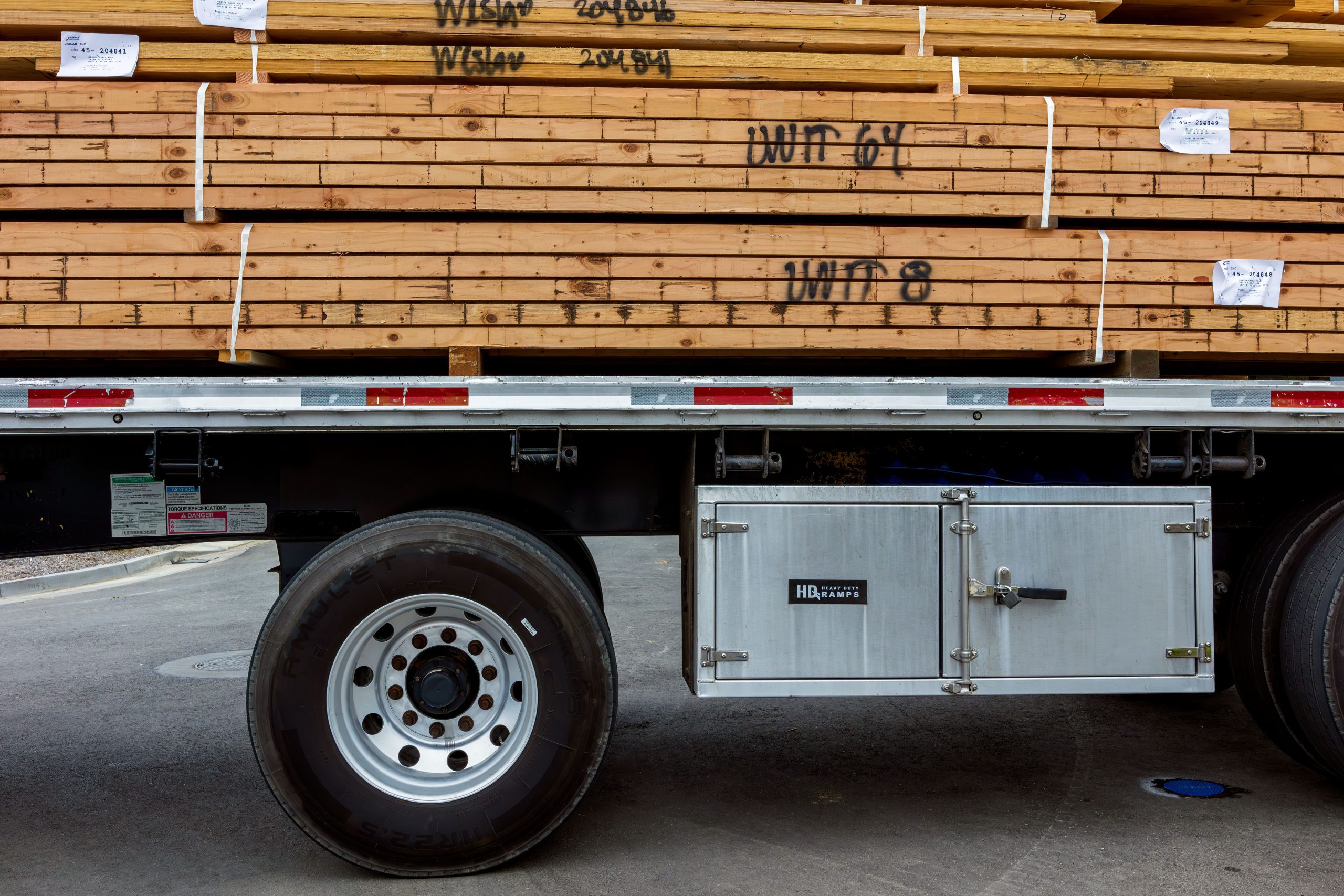
Construction projects can take many forms and happen on various scales, but various tools, materials and plant equipment will always be needed. The key is to acquire the right type of trailer for each of these elements to help your project go smoothly.
The UK construction industry is a big business. According to the most recent government statistics, in 2024, the value of construction work in Britain was £140,684, while there were 370,770 registered companies operating in the sector and 1.4 million employees.
Anyone planning a construction project will know that it will take a lot of labour, materials, tools and equipment to complete the task. This means there is a lot of logistical work needed to ensure that the whole project goes smoothly, especially as you aim to deliver it on time.
At the same time, projects can vary widely in scope, with different scales, varied materials and, on occasions, some major technical challenges.
Examples of such differences include:
- Projects based on revamping existing buildings, which have become increasingly popular as architects have focused on reducing embedded carbon
- Some are based on Greenfield sites, whereas others are on brownfield, where significant site clearance work may be needed beforehand
- Some involve extensive excavation of foundations, especially tall buildings
- Some involve tunnelling.
What Are The Different Trailers You Can Use For Construction Projects?
This means there will be differences in the trailer requirements for each project, but Williams trailers can provide what you need in each and every circumstance.
For example, the trailer range includes:
- Tiltbed trailers, which have low ground clearance and are therefore easy for onboarding and off-ramping heavy plant vehicles
- Plant trailers, which are custom-designed for transporting plant equipment safely
- Single axle tippers, which are smaller vehicles that are useful for transporting materials to a site
- Double axle tippers are larger vehicles that are useful for filling up with waste material so that it can be taken away and deposited in an appropriate place
The use of tiltbed trailers and plant trailers is likely to be useful in most projects, as they can get plant material where it needs to be and easily unloaded to the ground where it will work.
Others may be used more in some cases than others, but also in different ways and quantities.
How Can You Deal With Large-Scale Remediation Tasks?
For instance, when remediation work takes place that could involve demolishing existing structures, cleaning up rubble or removing soil with toxic material, the size of the project will determine how many double axle trailers you need.
An example of this might include the upcoming project to construct a new stadium for Manchester United, with the club recently revealing it had concluded a deal to buy land close to its existing Old Trafford venue.
The land west of the stadium is all on the vast Trafford Park estate and has been used for industrial purposes since the 19th century, albeit with the exact uses of any particular plot of land changing over time. This means the land may require a lot of remediation work.
In addition, because the new stadium is set to be very large, it will require deep foundations, with parts of the structure likely to be built underground.
If this project will generate a lot of rubble and earth to be moved, the volume that needs to be taken away from sites is even greater when tunnels are involved.
Several current projects require large amounts of tunnelling, including the surviving section of the HS2 project between London and Birmingham, where 20 per cent of tunnelling work remains to be done, plus upcoming projects like the Lower Thames Crossing.
How Can You Deal With Soil Excavated In Construction Projects?
Some may ask where all the earth excavated from major tunnels goes. In some cases, it can be reused on site, for example, by building up embankments in the case of a railway.
However, when very large amounts are involved, some creative solutions can be found. A prime example of this happened during the construction of the Elizabeth line, when three million tonnes of earth were excavated from the tunnelled section under London.
This was taken to Wallasea Island on the Essex coast, where it was used to create a wetland habitat for birds on land owned by the RSPB. It is fair to say a lot of trailers would have been used in such a large undertaking.
Whether something similar will happen in the Lower Thames Crossing project is not stated in its nature plan, although it does pledge to create new landscaped areas and wetland habitats, which may suggest that the soil may be redistributed for these purposes.
Whatever you plan to do with excavated soil or remediated waste, double axel tippers will give you exactly what you need to take it away from the site, while different kinds of trailers can meet your other requirements.