

The Golden Rules For Controlling Your Speed While Towing A Trailer
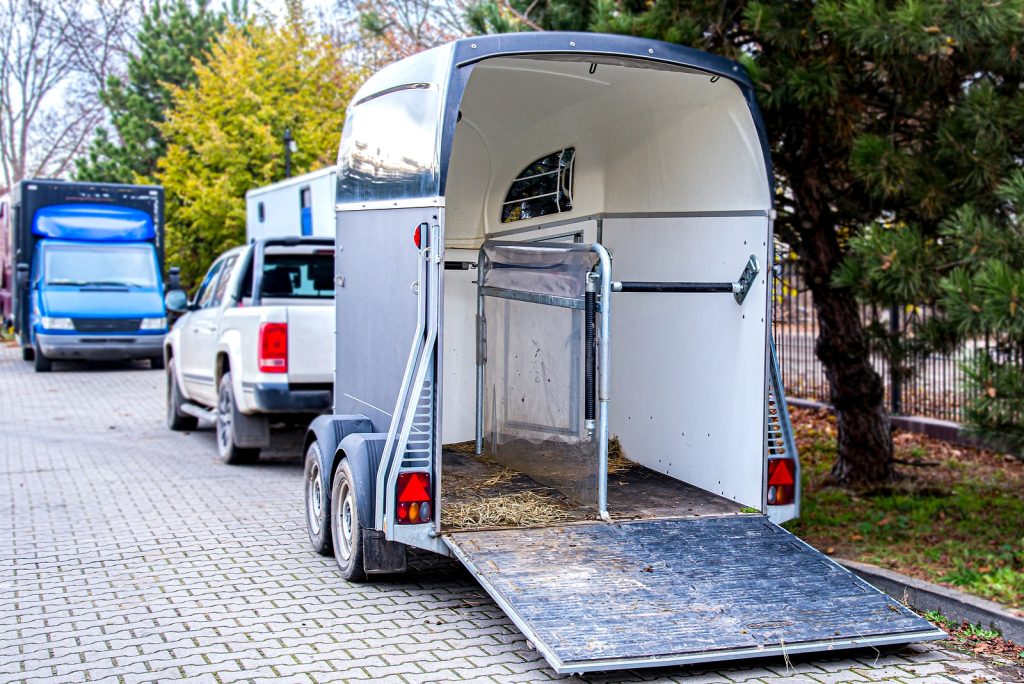
With the extra weight, length and pivot points which come from a trailer, there are additional challenges in driving them on the road that make services, repairs and pre-journey inspections essential for a safe, expedient journey, especially during winter.
As an official distributor for Ifor Williams, we are often asked not only what the best trailer is for particular business needs, as well as ensuring pristine servicing and high-quality repairs, but also how to travel at speed confidently whilst towing.
One of the best ways to build up your skills and confidence is to take a towing course through an organisation such as the Safe Towing Scheme. These schemes provide accredited training to ensure that operators feel comfortable driving with a trailer.
If you are mostly comfortable with driving and towing, however, here are a few golden rules of towing at speed which will help ensure that you drive comfortably, safely and whilst protecting your trailer and its load even in wet or icy conditions.
Follow The Laws For Towing
The first and most basic step is knowing what you can legally tow, which is determined by a combination of your driving licence and the maximum towing capacity of your car as written either on the specification sheet or the VIN plate.
As well as this, note that whilst the speed limit for trailers is the same as cars in built-up areas (30mph or 20mph in Wales), it is 10mph less than the stated limit on single carriageways (50mph instead of 60mph), dual carriageways and motorways (60mph instead of 70mph in both cases).
Follow Rule 98 of the Highway Code, particularly when it comes to avoiding the right-hand lane of the motorway and fitting a safety chain to your trailer.
Make Sure Your Trailer Is Safe Before Setting Off
Make sure that your trailer has received a service recently if you are in any doubt about its condition, and ensure you undertake a series of simple but essential safety checks before you set off.
In particular, check the condition of:
- The trailer’s connection to the pin or towball, particularly the cables, plugs and coupling height.
- The breakaway cable, as it needs to be in good condition to apply the trailer’s brakes if it ever becomes detached.
- The tyres on both the trailer and towing vehicle.
- The lights and indicators. Test them to make sure they are working before setting off.
- The load itself, specifically that it is secure, evenly distributed closer to the centre of the trailer and secured.
The 85 Per Cent Rule For Towing
A general rule of thumb that drivers towing a trailer use is that your trailer should not exceed 85 per cent of the kerb weight of your towing vehicle.
It is not a law, and can in fact be exceeded as long as you do not break the legal towing limit, have a powerful enough towing vehicle and confidence in your abilities to drive said vehicle and trailer, but it is a useful golden rule that ensures maximum stability.
Bear in mind, however, that in some unusual cases 85 per cent of your towing vehicle’s kerb weight is still above the maximum legal towing capacity of your car or your licence, so ensure that you always prioritise the law.
If you plan on exceeding the 85 per cent rule:
- Ensure your towing vehicle has a high specified towing capacity.
- The load is secured above the axle and as low as possible.
- The tyres are well within the load rating limits and are in good condition.
- The noseweight against your car’s towball is set correctly.
Drive To Your Capabilities Or Limitations
More generally, you should drive safely within your capabilities or limitations. Do not drive on roads you do not feel confident taking or at speeds higher than you feel comfortable doing so with a heavy trailer.
As heavier loads increase the stopping distance of your trailer, err on the side of caution when driving at higher speeds and leave plenty of space for the car in front.
Never Make Drastic Moves
Trailers should never move swiftly and suddenly, as this can cause weaving, snaking, or even jackknifing in the worst-case scenario.
Instead, gradually build up speed, ease off the accelerator when you plan on changing lanes or slowing down, feather the brake, and only use it in order to do an emergency stop.
What Should You Do If Your Trailer Starts Swaying?
If you are dealing with a snake, do not slam the brakes and do not speed up to try and power out of it.
Instead, ease off the throttle, keep the wheels pointing forward and allow the trailer and vehicle to slow down gradually, allowing you to regain control.