
When adverse weather suddenly hits, the towing conditions that you took for granted just moments ago can rapidly change, which in some cases can cause a trailer to start swaying or even snaking around.
Sometimes this is a consequence of the conditions, sometimes it is due to poorly secured trailer loads, but other times it is a consequence of worn-out parts which need to be replaced.
As a trusted local distributor of Ifor Williams trailers, service and components, we are in the perfect position to provide advice on what may be causing your trailer sway, whether it requires a simple adjustment to your work or extensive repairs, and how to minimise it in the winter.
As cold weather approaches and the weather gets ever more unpredictable, here is what causes trailer snaking, what you can do about it as it happens, safe towing habits and how to avoid any problems in the future.
What Is Trailer Snaking?
Swaying or snaking is when a trailer or caravan weaves about pendulously whilst being towed in a straight line, typically long after a turn, lane change or other manoeuvre has been executed.
It can be somewhat unnerving when it happens whilst driving, particularly as it can intensify, making it more difficult to control the trailer and even potentially leading to jackknifing, where the trailer swings around the towing vehicle, and an increased risk of accidents.
What Causes Trailer Sway?
- Towing Too Quickly – Beyond making sure that you follow the lower national speed limits, travelling too quickly or putting your foot down can cause or intensify snaking.
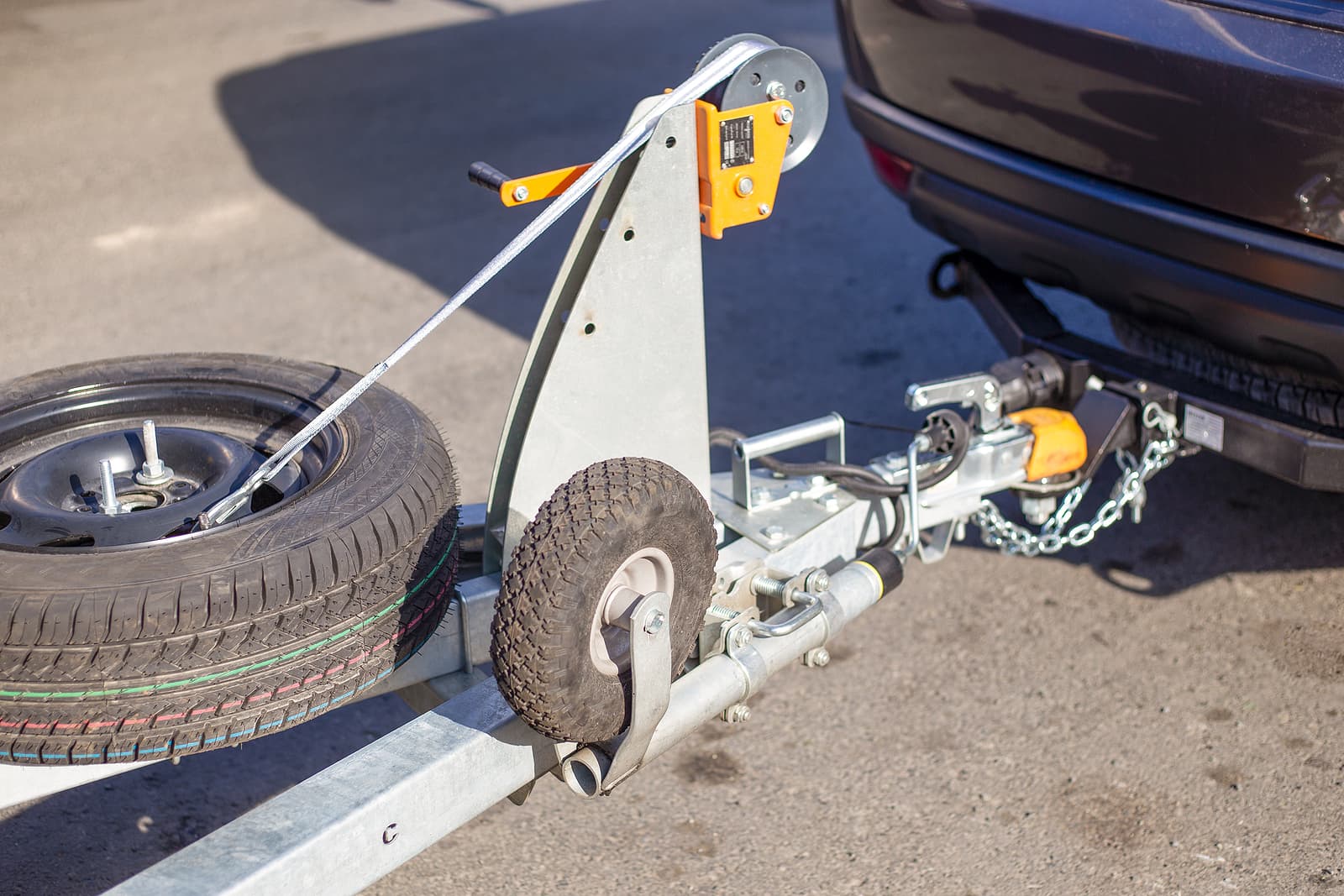
- Incorrect Coupling – If the coupling or connection between the trailer and towing vehicle is inappropriate, it can make the latter harder to control.
- Bad Weather Or Road Conditions – If a road is bumpy, has a loose surface such as gravel, is uneven, has standing water, ice or snow on top, it is far more difficult to maintain traction and balance whilst towing a trailer.
- Poor Distribution Of Loads – The weight distribution of a trailer is essential, as poorly secured or incorrectly balanced loads can cause snaking and increase the risk of jackknifing.
What Can You Do If Your Trailer Starts Snaking?
If your caravan starts to snake, remain calm and start acting immediately to regain control of your trailer and towing vehicle.
Hold onto your steering wheel tightly and avoid sudden movements. Ideally, you should keep moving straight ahead as long as it is safe to do so, whilst gradually reducing your speed by lifting your foot off the accelerator pedal.
Shift down if you are using a car with a manual gearbox, but only gently apply the brakes if you feel like you are in danger of a collision. Slamming on the brakes often causes a jackknife.
If you are still struggling to stop the snake after this, get off the road as quickly as possible, either by pulling over at the side of the road or taking the nearest exit on the motorway.
Examine the trailer once you have come to a complete stop and check your couplings and hitches to ensure there is a firm connection, as well as your existing load to see if it has moved or is causing an unbalanced ride.
In many cases, snaking is fixable, but it requires swift, decisive but also gentle action to bring everything to a gradual, safe stop.
How Do You Avoid Trailer Sway In The First Place?
The best possible way to avoid trailer snaking is to stop it happening to begin with. This ensures that you stay safe, your trailer is easier to control, and you feel more comfortable at the wheel of your trailer, regardless of the weather or the driving conditions.
With that in mind, here are some top tips to minimise the risk of sway in your trailer.
Make Sure Any Loads Are Properly Balanced And Secured
A common cause of snaking is uneven weight distribution, where, due to incorrect securing or having the weight of loads biased on one side or the other, the trailer has a tendency to lean in one direction, affecting balance and causing snaking.
Use The Right Coupling
Make sure your trailer is connected properly to your towing vehicle, with the appropriate anti-sway bars and a connector that is right for the size and weight of the trailer you are towing.
Plan Your Route Carefully
Try to avoid difficult roads where possible, avoid unnecessary journeys in bad weather and aim to complete as much of the journey on main roads as possible, as they will be kept in the best possible condition for your trailer.
Make Sure Your Trailer Is Serviced
Inspect your trailer before you start to make sure there are no egregious problems, but get in touch with the experts if you are at all worried about broken or damaged parts.