
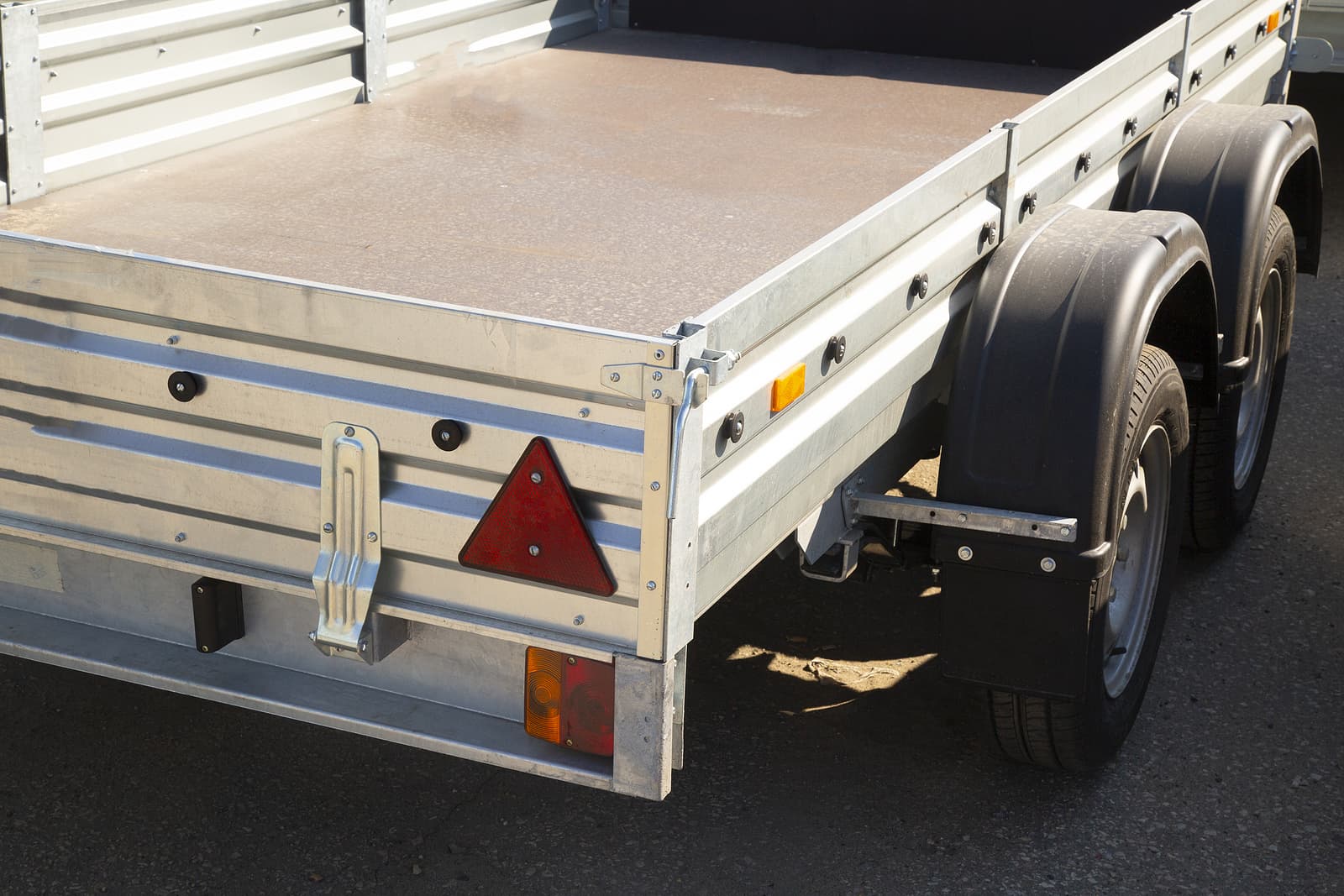
By the time winter arrives, it brings with it a new set of challenges for your trailers, and it is typically a good idea to book a service with your local Ifor Williams trailer experts before the weather to ensure that its tyres can handle the variable conditions.
Whilst every part of a trailer needs maintenance over the winter to ensure it can quickly be rolled out in the spring, trailer tyres can be affected by inactivity in the same ways that any other tyres can.
However, as these tyres are designed differently, they have some fundamental changes to take into account the fact that they often need to carry heavy loads whilst avoiding snaking.
A lot of people will be working on their tyres over the autumn as part of their winterising routine, and with that in mind, here are the answers to some of the most commonly asked questions we get about trailer tyres.
Are Trailer Tyres The Same As Car Tyres?
Outside of being made of the same material and having the same basic shape, trailer tyres are quite differently made and are typically given a special marking to denote them as trailer tyres.
The reason for this is that trailer tyres are built to be significantly stiffer in order to carry heavier loads and maintain stability whilst being towed.
You cannot swap trailer tyres for regular tyres, even in the rare cases where both types of tyre fit on the same wheel.
The different handling characteristics will cause your trailer to be significantly more difficult to control, and the wear on the tyres will be far more intensive.
All of this, in combination, leads to a greater risk of accidents, which makes having a spare trailer tyre a better option than trying to use your car’s spare tyre.
What Do You Need To Do To Ensure Your Trailer Tyres Are Legally Compliant?
Trailer tyres are bound by broadly the same laws as conventional car tyres, and if your tyres fail to comply with the current registered standards, you can receive up to 3 penalty points and a fine of up to £2500.
Specifically, trailer tyres must:
- Have a minimum tread depth of at least 1.6mm around the whole circumference and across the centre three-quarters of the tyre most likely to contact the road. In reality, anything lower than 3mm will be next-to-useless in the rain.
- Be protected by mudguards.
- Not have any bulges.
- Not have any deep cuts.
- Be the same type of tyre. In other words, you cannot have radial and cross-ply tyres on the same axle.
- Be correctly rated for your trailer.
Ultimately, your trailer tyres need to be treated the same way as your towing vehicle’s tyres, and particularly in winter or following a break period where there is a chance of degradation and flat spotting.
What Can Cause Trailer Tyres To Degrade?
More than any other component on your car, trailer tyres are vulnerable to degradation of the rubber.
This can become particularly noticeable once your trailer has been put away for the winter, as the pressure of staying in one place in combination with the colder conditions can cause flat spots in the tyres if they are not rotated or the trailer is not stored on a jack.
The rubber itself can rub away, but it can also harden and become easier to crack, which increases the risk of a blowout or flat tyre if not managed properly.
When Should You Change Your Trailer Tyres?
We can give advice on how well your trailer tyres are holding up and replace any that are no longer fit for purpose, but there are a few rules of thumb you can follow whilst waiting for your service:
- There is damage to the tyre, such as bulging in the sidewalls, punctures or cracks. As trailer tyres run on higher pressures, any weakness is potentially dangerous.
- There are visible tears and scuffs on the tread area and sidewalls, as this can affect traction or indicate accelerated wear.
- The tread depth is under 1.6mm, which would make them illegal to use. However, you should consider replacing them at 3mm if you use your trailer in winter weather or expect to drive in the rain a lot.
- The tyres are six years old or older. The tyres will have a date of manufacture to help with this.
- The tyres are regularly underinflated, and it is difficult to maintain adequate tyre pressures.
As with everything else trailer-related, we can help ensure that your trailer stays safely on the road, and regular services help to enhance a working trailer’s lifespan.